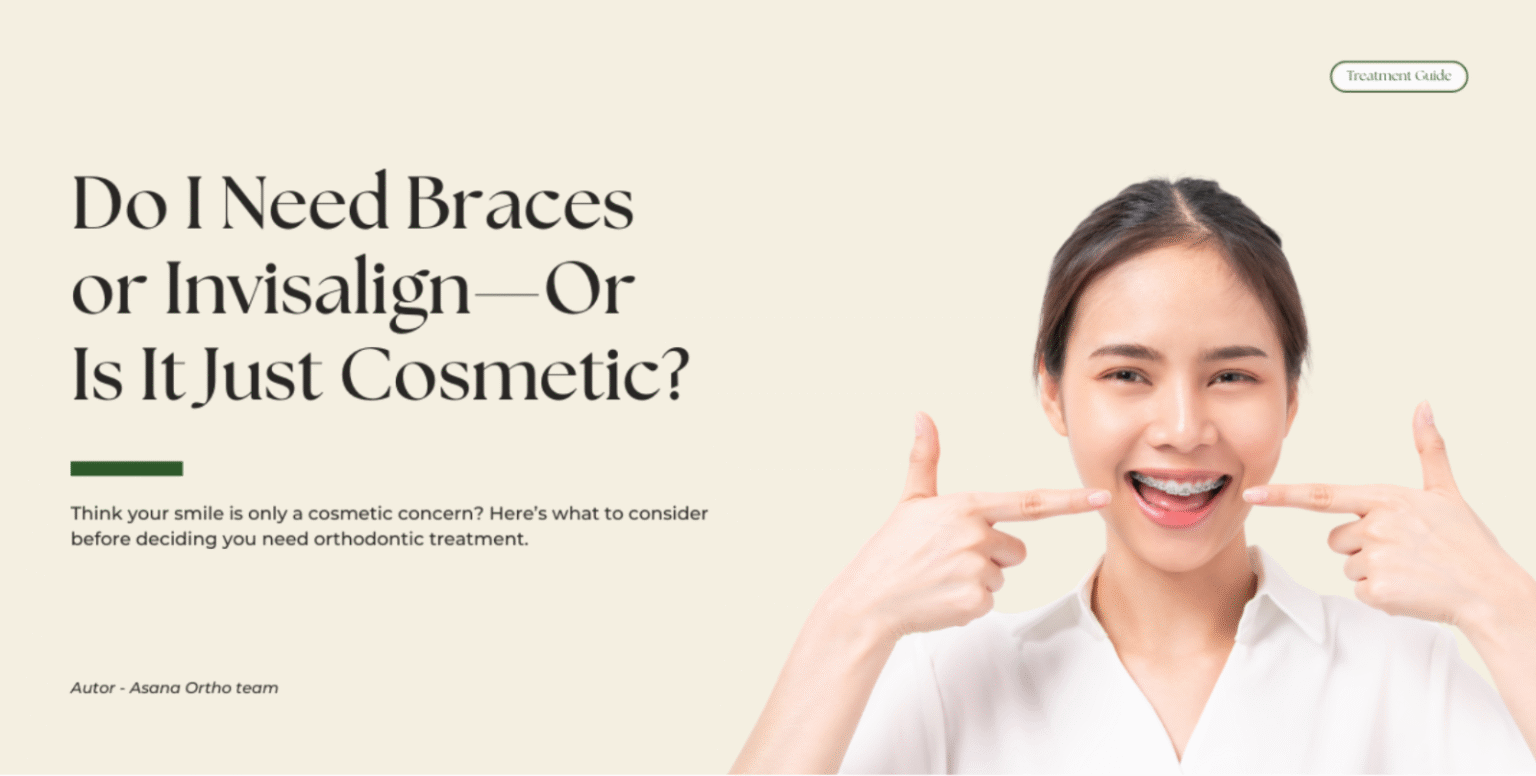
Do I Need Braces or Invisalign, or Is It Purely Cosmetic?
A smile can look “mostly fine” while still having crowding, spacing, bite imbalance, or tooth wear that deserves attention.
If you are only concerned about how your teeth look, Invisalign or braces may still be worth considering. But before treatment begins, it is important to find out whether the visible concern is truly cosmetic, or whether your bite, tooth alignment, gum health, or long-term stability should also be part of the plan.
A smile can look “mostly fine” while still having crowding, spacing, bite imbalance, or tooth wear that deserves attention. At Asana Ortho, we begin with an in-person orthodontic evaluation so you understand both the cosmetic and functional side of your smile.
Is orthodontic treatment only cosmetic?
Sometimes, yes, and that is completely valid.
Wanting to feel more confident when you smile, speak, laugh, meet clients, attend events, or take photos is a meaningful reason to explore orthodontic treatment. Adults often seek Invisalign because they notice:
- Crowded or overlapping front teeth
- Gaps between teeth
- One tooth that sits out of line
- Teeth that shifted after previous braces
- A smile that does not reflect how confident they feel
- A desire for a less noticeable alternative to traditional braces
However, orthodontic treatment is rarely planned by looking only at the front teeth. Your orthodontist also considers how your upper and lower teeth meet, how your teeth function when you bite, whether teeth are wearing unevenly, and whether your results can remain stable over time.
The goal is not simply to create a straighter-looking smile. It is to create a smile that looks natural, functions comfortably, and is designed to last.
When a cosmetic concern may involve more
Crowding can affect cleaning
When teeth overlap or rotate, it may be harder to brush and floss between them thoroughly. Clear aligners are removable, which can make daily brushing and flossing easier during treatment, but good oral hygiene still depends on wearing aligners correctly, cleaning them, and maintaining consistent dental care. Research generally finds that clear aligners can support better plaque control and gum-health measures than fixed braces, although results depend heavily on daily hygiene and patient compliance.
Spacing may change over time
Small spaces may be a cosmetic concern, but they can also be related to tooth size, tooth position, tongue habits, missing teeth, or changes that occur naturally over time. Your orthodontist will look at why the space is present before deciding whether aligners alone are the best solution.
Uneven tooth wear may be a clue
If teeth meet unevenly, some teeth may take more force than others. You may not feel pain, but an orthodontic evaluation can check for signs of excessive wear, shifting, or bite interference.
A front-tooth concern may be connected to the bite
A tooth that looks too far forward, too far back, crooked, or uneven may be connected to your overall bite relationship. Moving only the visible teeth without considering the bite can create a result that looks better initially but may be less stable or less functional over time.
This does not mean every cosmetic Invisalign case is complex. It means the right plan starts with a complete evaluation, not a quick glance at the front teeth.
Do I need Invisalign or braces?
The honest answer is: you may not need either.
If your teeth are healthy, your bite is comfortable, and the appearance of your smile does not bother you, there is no requirement to pursue orthodontic treatment. Orthodontics is a personal choice.
But if your tooth alignment affects your confidence, makes cleaning difficult, causes uneven wear, or has changed since previous orthodontic treatment, a consultation can help you understand your options.
At Asana Ortho, we may recommend one of four paths:
| Your Situation | Possible Recommendation |
|---|---|
| Minor cosmetic concern with a healthy, stable bite | Invisalign may be an option for targeted alignment |
| Crowding, spacing, or teeth that shifted after braces | Invisalign or braces, depending on the movements needed |
| More complex bite concerns | Braces, Invisalign with additional tools, or a combined approach |
| No meaningful orthodontic concern and no personal desire for change | No treatment; continue routine dental care |
The best appliance is not always the most invisible one. The best choice is the one that can achieve your goals safely, predictably, and with a plan for keeping the result stable
Is Invisalign a good option for cosmetic changes?
Invisalign can be a great option for many adults with cosmetic concerns, especially when the goal is to improve mild to moderate crowding, spacing, or relapse after previous braces.
Clear aligners are removable and less noticeable than braces. For many working professionals, parents, college students, creators, and adults who spend time in meetings or on camera, that flexibility is a major advantage.
However, Invisalign is still orthodontic treatment. It may involve more than simply receiving clear trays. Depending on your case, treatment may include:
- Small tooth-colored attachments that help aligners grip and move teeth
- Elastics to improve how the teeth fit together
- Bite ramps or other built-in aligner features
- Refinements near the end of treatment
- Retainers to help protect your result after treatment
Clear aligners are effective for many orthodontic problems, but some movements and bite corrections may be better managed with braces or a different treatment approach. Published reviews support clear aligners as an effective option for many mild-to-moderate alignment cases while noting that complex cases require careful diagnosis and planning.
Why bite and function still matter
Aesthetic goals and functional goals are not opposites. They often work together.
For example, if your lower front teeth are crowded, you may want them straightened because they look uneven in photos. During your exam, your orthodontist may also evaluate whether those teeth are being pushed forward, whether they are difficult to clean, how they contact the upper teeth, and how much room is available to align them properly.
That information helps create a plan that is not just “make the teeth look straight.” It becomes:
Create a balanced smile while respecting the health of the teeth, gums, bite, and long-term stability.
A comprehensive orthodontic assessment considers your teeth, gums, jaw relationship, bite, and individual goals. This is why the American Association of Orthodontists encourages patients to consider specialist training and ask detailed questions about diagnosis, treatment options, and follow-up care.
Questions to ask yourself
You may be ready for an orthodontic consultation if you answer “yes” to one or more of these questions:
- Do I avoid showing my teeth when I smile or take photos?
- Have my teeth shifted since I had braces as a teen?
- Do I have a gap, crowding, or a crooked tooth that bothers me?
- Is it difficult to floss or clean between certain teeth?
- Do my teeth feel uneven when I bite together?
- Have I noticed chipping, wear, or changes in how my teeth meet?
- Do I want to explore a subtle, less noticeable orthodontic option?
- Do I want professional guidance before deciding whether treatment is worth it?
You do not have to be certain you want Invisalign before booking a consultation. The purpose of the visit is to learn what is possible and decide whether treatment aligns with your goals.
What happens at Asana Ortho?
Your first in-person consultation at Asana Ortho is complimentary and designed to give you clarity, not pressure.
During your visit, we will:
- Listen to what you would like to change about your smile
- Evaluate your teeth, bite, and orthodontic needs
- Discuss whether your concern is cosmetic, functional, or a combination of both
- Take digital records when clinically appropriate
- Explain whether Invisalign, braces, another approach, or no treatment is the best fit
- Review estimated treatment timing, investment, insurance information, and payment options
Your treatment is led by Dr. Nourah, a board-certified orthodontist and Diamond Plus Invisalign Provider. She evaluates the full picture, your smile, bite, goals, and lifestyle, before recommending a treatment path.
At Asana Ortho, we serve children, teens, and adults throughout Berkeley, Albany, El Cerrito, and the East Bay. Whether you want a small cosmetic change or need a more comprehensive orthodontic plan, you deserve an honest answer about your options.
The bottom line
Your first in-person consultation at Asana Ortho is complimentary and designed to give you clarity, not pressure.
During your visit, we will:
- Listen to what you would like to change about your smile
- Evaluate your teeth, bite, and orthodontic needs
- Discuss whether your concern is cosmetic, functional, or a combination of both
- Take digital records when clinically appropriate
- Explain whether Invisalign, braces, another approach, or no treatment is the best fit
- Review estimated treatment timing, investment, insurance information, and payment options
Your treatment is led by Dr. Nourah, a board-certified orthodontist and Diamond Plus Invisalign Provider. She evaluates the full picture, your smile, bite, goals, and lifestyle, before recommending a treatment path.
At Asana Ortho, we serve children, teens, and adults throughout Berkeley, Albany, El Cerrito, and the East Bay. Whether you want a small cosmetic change or need a more comprehensive orthodontic plan, you deserve an honest answer about your options.
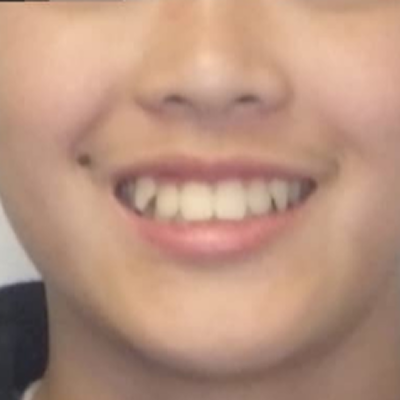
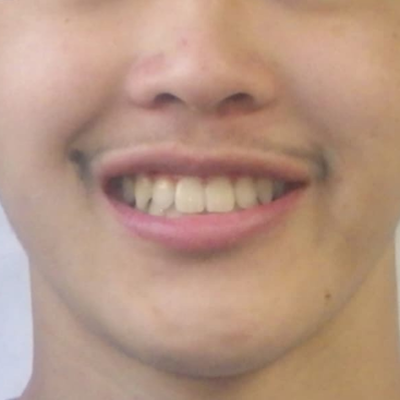
Reason Behind 1000+ Smiles in Berkeley
Invisalign in Berkeley at Asana Ortho is led by Dr. Nourah, a Key Opinion Leader for Invisalign and one of the top 0.1% Invisalign providers globally, giving you access to expert-level planning and results.
- Detailed consultation before we even sit you down for a treatment
- Quick turnaround time, no needless treatment walk-ins
- Customized braces and aligners for which stage your teeth are in
- You can also avail teeth cleaning in Albany
- Peace of mind with virtual and remote care options
Why Asana Ortho
Invisalign Care for Berkeley, Albany, El Cerrito, and the East Bay
At Asana Ortho, your treatment is led by Dr. Nourah, a board-certified orthodontist and Diamond Plus Invisalign Provider. Her experience includes treating children, teens, and adults with clear aligners and braces—from straightforward spacing or crowding to more complex bite concerns. Every recommendation begins with an in-person evaluation of your teeth, bite, goals, and lifestyle.
Our practice builds on 30 years of serving the community, with a refreshed approach centered on personalized planning, clear communication, and orthodontic care tailored to real life in the East Bay.
When comparing orthodontists, look beyond marketing labels. Ask who will diagnose your bite, who will oversee your progress, what alternatives are offered, what is included in your fee, and what support you will receive after treatment.
Ready to Learn What Is Possible for Your Smile?
Schedule your complimentary, in-person Invisalign consultation at Asana Ortho. We will listen to your goals, evaluate your smile and bite, and help you understand your options—so you can choose your next step with confidence.